

- Link building is the process of acquiring backlinks, which are seen as “digital votes of confidence” by Google.
- The focus of link building has shifted from quantity to quality, relevance, and value.
- Beginner and intermediate strategies include guest blogging, using the “Skyscraper Technique,” and pitching content for link roundups.
- Advanced strategies involve digital PR to earn editorial backlinks and creating free, link-worthy tools.
- The best strategy depends on a business’s growth stage and should focus on providing value for long-term SEO success.
Let’s face it—no matter how much SEO evolves, one thing hasn’t changed: backlinks still matter.
In fact, according to a 2023 industry study by Ahrefs, pages in the top 3 search results have 3.8x more backlinks than the pages ranking in positions 4 through 10.
That’s not a coincidence—Google considers backlinks a strong indicator of authority, relevance, and trustworthiness.
But here’s the problem: building links isn’t as easy as it used to be. You can’t just spam comment sections or submit your site to hundreds of low-quality directories and expect results.
Google’s algorithms have grown smarter, and the SEO game has shifted towards quality over quantity.
Most businesses’ current question isn’t “Can I get backlinks?” It’s “How do I get the right backlinks that actually move the needle?”
That’s where this guide comes in.
Whether you’re just starting out or have been in the SEO trenches for years, this article will walk you through real, actionable link-building strategies tailored to where you are in your journey.
We’ve divided things into beginner, intermediate, and advanced tactics so you’re not wasting time on methods that don’t match your goals or resources.
You’ll find strategies used by some of the world’s top marketers, backed by data, tested over time, and refined.
We’re talking about everything from traditional guest blogging and digital PR to more modern techniques like linkable assets, HARO outreach, and even leveraging your brand’s story for editorial coverage.
More importantly, you won’t just get a list—you’ll understand when and why each strategy works, along with the tools to make it easier.
If you’re tired of watching competitors outrank you and you’re ready to finally take control of your backlink profile, this is your blueprint.
Let’s start building links that actually make a difference!
Your Website Should Work as Hard as You Do!
Don’t let it sit there collecting dust. Optimize it with expert SEO and watch the leads roll in.
Contact UsWhat Is Link Building?
Link building is the process of getting other websites to link back to yours—and in the world of SEO, that’s a big deal.
These links, often called “backlinks,” are like digital votes of confidence. When another site links to your content, it’s essentially saying, “Hey, this is worth checking out.”
Google notices that, and when enough credible sources are pointing to your site, it starts to trust your content more. That trust translates into higher rankings.
Today, link building isn’t just about volume—it’s about strategy, relevance, and value. Gone are the days when you could buy a bunch of cheap links and watch your rankings skyrocket overnight.
Now, search engines are a lot smarter. They look at where the link is coming from, how it’s placed, and why it’s there in the first place.
Links from high-authority, niche-relevant sites carry far more weight than a random backlink from an unrelated blog.
There are different types of backlinks, too. The most common ones you’ll hear about are:
- Dofollow links, which pass on SEO value (this is what you’re aiming for most of the time).
- Nofollow links, which don’t pass link equity but can still drive traffic and brand awareness.
- UGC (User Generated Content) and Sponsored links, which are tagged to show their source, helping Google distinguish between organic and paid or user-submitted content.
Understanding how links function behind the scenes helps you avoid common pitfalls—like over-optimizing anchor text or chasing irrelevant backlinks—and focus on what actually helps you grow.
At its core, link building is about building relationships and creating value.
When done right, it can not only boost your rankings but also increase your referral traffic, grow your brand visibility, and open doors to new partnerships.
Think of it this way: content might be king, but links are the roads that lead people—and search engines—to your castle.
Featured Article: Internal Linking for SEO: The Complete Guide for 2026
Strategy Tiers: A Smarter Way to Learn
Let’s be honest—link building can feel overwhelming.
There are literally hundreds of strategies out there, each with its own playbook, pros and cons, and tools. And while most guides throw everything at you in one massive list, we’re doing things differently here.
Instead of giving you a firehose of random tactics, we’re organizing this guide into three strategy tiers: beginner, intermediate, and advanced.
Why? Because not every business is starting from the same place.
Maybe you’re new to SEO and just need the easiest wins to start gaining traction. Or maybe you’ve already nailed the basics and you’re looking for more scalable, strategic tactics.
Or perhaps you’re part of a growing team ready to dive into advanced link-building campaigns, PR outreach, or large-scale partnerships.
Wherever you are, this tiered system helps you focus your time and resources where they’ll have the most impact. No wasted hours chasing backlinks that won’t move the needle.
Here’s a quick breakdown of what to expect:
- Beginner Strategies are perfect for small businesses, solo marketers, or anyone just starting with SEO. These are low-effort, low-risk tactics like local citations, basic outreach, and profile links that help build your site’s foundation.
- Intermediate Strategies are for marketers with some experience. These include content-driven approaches, link reclamation, PR tools like HARO, and influencer collaboration—great for building momentum and authority.
- Advanced Strategies are where things get serious. Think digital PR campaigns, data-driven assets, microsites, and scalable partnerships. These require more resources but deliver long-term, sustainable growth.
You don’t have to follow them in perfect order. The goal is to identify what level you’re at right now and cherry-pick the strategies that align with your business stage, budget, and goals.
Beginner Link-Building Strategies (The Low-Hanging Wins)
If you’re just getting started with SEO, link building might seem a little intimidating—but it doesn’t have to be.
Beginner strategies are all about quick wins. These are simple, low-cost methods that don’t require advanced tools, a big budget, or a huge outreach team.
They’re perfect for small businesses, startups, bloggers, and anyone trying to build a solid backlink foundation from scratch.
The goal here isn’t to go viral or land a backlink from The New York Times (yet). It’s to establish your domain with relevant, trustworthy links and start building credibility with search engines.
Let’s break down the beginner strategies into four simple categories:
-
Low-Hanging Fruits: Directories, Citations, and Profiles
Some of the easiest backlinks you’ll ever get come from places that are literally made for it.
Local business directories like Yelp, Hotfrog, and Foursquare are often free to list on and carry solid domain authority. Make sure your business is listed on:
- Google Business Profile
- Bing Places
- Yelp
- Apple Maps
- Trustpilot
- Chamber of Commerce directories
- Local council or tourism websites (if applicable)
Also look into industry-specific directories—these carry more niche relevance and can often lead to referral traffic.
Don’t ignore profile links either. Creating accounts on platforms like Crunchbase, GitHub (for tech brands), ProductHunt, or even forums relevant to your niche can earn you clean, legitimate backlinks.
These types of links might not carry massive SEO power on their own, but together, they build a natural, trustworthy backlink profile.
-
Relationship-Based Tactics
Sometimes, the easiest links come from the people you already know.
Reach out to:
- Business partners
- Suppliers
- Clients you’ve worked with
- Local associations or meetups
Ask if they’d be open to linking to your website—maybe from a partner page, a testimonial section, or a resources list. It’s often as simple as asking, and many will be happy to help, especially if you’ve built a good relationship.
This type of link is not only easy to get but also highly relevant and natural—exactly what Google likes to see. -
Easy Content Hacks
You don’t always need to create groundbreaking content to earn links. Sometimes, small tweaks to what you’re already doing can help you generate backlinks naturally.
Blog commenting (when done right) can help you build connections in your niche and get your site on the radar.
The key here is to avoid spammy behavior. Instead of dropping generic comments like “Nice post!” with a link, add something meaningful to the conversation.
Some blog platforms still allow a website link next to your name—that counts as a backlink, even if it’s nofollow.
Email signatures are another simple trick. If you’re regularly communicating with clients, collaborators, or prospects, your email signature can include a link to your homepage, blog, or most valuable resource.
It’s not going to explode your rankings, but it adds one more signal in your favor—and every bit helps at this stage.
If you run a blog, internal linking is another powerful (and free) tactic. While technically not an external backlink, building smart internal links improves crawlability and can boost rankings for your most important pages.
Also, if you’re publishing content consistently, consider turning it into an RSS feed and submitting it to blog aggregators like Feedspot or Alltop.
This increases visibility and can earn backlinks from content curation sites.
These tactics may not drive hundreds of backlinks overnight, but they help create a natural, well-rounded profile that search engines trust.
-
Submission-Based Strategies
This is where you create or repurpose content and submit it to platforms that accept external contributions.
Event calendars are great for local businesses. Hosting or participating in webinars, workshops, or community events? Submit the event to local listing sites or niche directories—most allow links back to your site.
Video and infographic submissions are another beginner-friendly option. Platforms like YouTube, Vimeo, DailyMotion, and SlideShare allow you to add website links in descriptions. If you create even basic visual content (like a how-to video or presentation), you can leverage these platforms for exposure and links.
Q&A platforms like Quora or Reddit also offer opportunities, but with a caveat: they must be used with care.
Dropping links without adding real value will get flagged quickly. But if you’re answering relevant questions in your niche and linking naturally to a useful resource on your site, these can drive traffic and long-term visibility.
PDF sharing sites (like Scribd or ISSUU) also allow you to upload whitepapers, guides, or case studies that include backlinks in the document or author bio. This works especially well if you’ve already created downloadable content.
These submission-based tactics help you put your content in front of new audiences while earning links in the process—win-win.
Featured Article: SEO Copywriting: What It Is & How to Do It in 2026
Intermediate Link-Building Strategies
Once you’ve covered the basics, it’s time to move into more strategic, value-driven link building. Intermediate tactics often involve content creation, smarter outreach, and a deeper understanding of your niche and audience.
These aren’t “quick wins” anymore—but they’re highly effective when done right. Think of this stage as your SEO growth zone. You’re not just collecting backlinks; you’re starting to earn them.
Here’s how to do it.
-
Content-Driven Strategies
This is where your blog, guides, tools, or other valuable resources start to shine.
Guest blogging is still one of the most powerful link-building methods when done with quality in mind.
Focus on pitching to reputable, niche-relevant sites—not generic content farms. Choose topics that offer unique insights or solve real problems for their audience. And make sure your link placement feels natural, not forced.
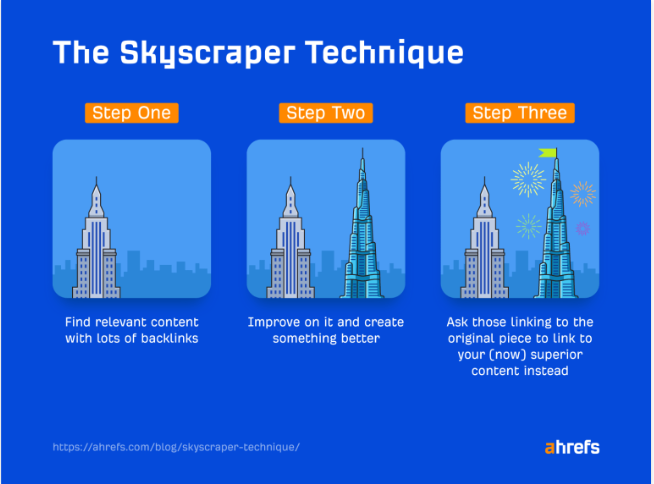
Then there’s the Skyscraper Technique—popularized by Brian Dean. The idea is simple: find content in your niche that already has tons of backlinks, make something even better, and reach out to the people linking to the original.

The Skyscraper Technique- An Infographic by Ahrefs It’s hard work, but when done right, the payoff is worth it.
Link roundups are another great way to get mentioned.
These are curated blog posts where publishers list the best content from the week or month. Find roundup opportunities in your niche and pitch your most valuable content.
Also, evergreen content—like how-to guides, checklists, glossaries, or templates—tends to attract links over time because it stays relevant. Invest in a few strong evergreen assets, and you’ll see steady backlink growth month after month.
-
Outreach and Digital PR
Link building and PR have started to overlap a lot more in 2026—and that’s a good thing.
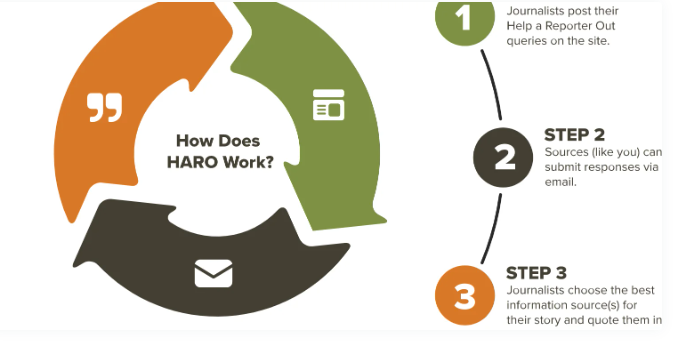
HARO (Help A Reporter Out) is a fantastic tool that connects journalists with sources. If you’re quick to respond and offer genuine insights, you can land backlinks from major publications like Forbes, HubSpot, or Business Insider. Signing up is free, and while competition is stiff, even one successful pitch can make a huge impact.

How HARO Works- An Infographic by Scalenut Podcast interviews are another underrated strategy.
Reach out to podcast hosts in your industry and offer to share insights, tell your story, or discuss a specific topic. These appearances often come with backlinks in show notes and help build your personal brand at the same time.
Creating and promoting original research, surveys, or data studies is a fantastic way to attract organic backlinks. People love citing stats—and if you’re the source, you become the authority.
Lastly, case studies and real-world examples of your work can also earn links, especially if you share them in relevant communities or submit them to directories and blogs looking for marketing success stories.
Alright, let’s dive into the next two intermediate strategies: Link Reclamation and Ego Bait & Collaboration. These are highly effective but often overlooked—great for building momentum in your SEO campaign.
-
Link Reclamation (Fixing What’s Already Yours)
Before you start chasing new backlinks, take a look at the ones you’ve already earned—or almost earned. That’s where link reclamation comes in.
One of the easiest wins in this category is reclaiming unlinked brand mentions. These are places where your brand, product, or content has been mentioned, but without an actual hyperlink.
Tools like Ahrefs, Semrush, or even Google Alerts can help you find these mentions. Once you do, reach out to the publisher with a simple, polite request to add a link. Since they’ve already mentioned you, there’s a good chance they’ll agree.
Next, there’s broken link building—a method that’s as helpful as it is effective. Here’s how it works: you find pages in your niche that have broken (404) outbound links, then suggest your content as a replacement.
You’re helping site owners fix broken pages and earning a backlink in the process. It’s a win-win.
Don’t forget about reclaiming links to old URLs. If you’ve ever changed page URLs or removed content, chances are some backlinks are pointing to a 404 page.
Use a tool like Screaming Frog or Ahrefs to identify these, then set up proper 301 redirects to keep the link equity flowing.
And finally, check your social profiles, old PR campaigns, or guest posts—anywhere that may link to a page that’s been updated or moved.
Reclaiming these links may not be glamorous, but it’s often one of the most cost-effective ways to strengthen your site’s authority.
-
Ego Bait and Collaboration
This one’s all about psychology. People love being recognized and featured—and when you give them a platform, many will gladly return the favor with a backlink.
Expert roundups are a classic example. Create a blog post asking 10–20 influencers, thought leaders, or professionals in your niche to answer one question.
Once the post is live, let them know they’ve been featured. Many will link back to your site or share it with their audience.
Interview-based content works similarly. Reach out to someone in your space and conduct a short Q&A—this could be in blog format, video, or even audio. Again, most people will promote the interview on their own platforms, which means more backlinks and more exposure.
Then there are “Best of” or “Top Tools” lists. If you create a “Top 10 X Tools for [Industry]” post and feature relevant companies, many of them will share the piece or link to it. Just make sure your list feels honest and valuable—not just a backlink play.
You can also offer testimonial links to tools or services you’ve genuinely used. Companies love displaying real reviews from customers, and they’ll often link back to your site as the source.
When done with authenticity, ego bait, and collaboration can help you build meaningful relationships and high-quality links.
-
Advanced Content Assets and Creative Link Attraction
By now, you’re probably getting comfortable with content creation and outreach—but if you want to really set yourself apart, you’ll need to level up what you’re offering to the web.
One powerful tactic is creating linkable assets—content that’s specifically designed to attract backlinks on its own. Think of things like:
- Industry statistics roundups
- Original research or surveys
- Ultimate guides and how-tos
- Templates and toolkits
- Glossaries of niche terms
These kinds of resources naturally attract links because they’re useful, referenceable, and often fill a gap in existing content.
A well-done infographic can also go a long way. While visual content isn’t as hyped as it used to be, a unique, informative infographic is still highly shareable—especially if you promote it properly. Include an embed code and reach out to relevant blogs that might find it helpful for their audience.
Another creative strategy? Build a free tool or calculator.
If you’re in a niche where data, planning, or measurement matters (think marketing, finance, health, real estate), a tool that solves a specific problem can earn you dozens or even hundreds of organic backlinks over time.
It could be something as simple as a social media post scheduler, keyword clustering tool, or ROI calculator—whatever your audience needs.
You can also tap into trend-driven or seasonal content. For example, if you publish a “2026 Content Marketing Trends” report or a “Holiday SEO Checklist,” and promote it well, people are likely to reference it in their own content.
Don’t forget to promote your assets through outreach. Creating something valuable is half the job—getting it seen is the other.
Find bloggers, journalists, and site owners who might benefit from linking to your resource, and send a well-crafted, personalized pitch.
When you consistently create content worth linking to, you’ll eventually find that backlinks start coming to you without asking. That’s when link building shifts from a grind to a growth engine.
Featured Article: What Is On-Page SEO? A Beginner’s Guide for 2026
Advanced Link-Building Strategies (High-Level, High-Impact)
By the time you’re ready for advanced link-building, you’re no longer just looking for backlinks—you’re aiming for visibility, credibility, and influence.
At this stage, you’re playing the long game, building assets and campaigns that bring in organic links, media attention, and business partnerships.
These strategies take more planning and creativity, but they also offer a bigger payoff. If your brand is in a competitive niche, these are the moves that can separate you from the pack.
-
Digital PR and Outreach Campaigns
Digital PR is link building at its most powerful. It’s about earning high-quality editorial backlinks by creating stories that journalists and publishers want to cover.
This could be:
- A unique data study on industry trends
- A controversial opinion piece backed by research
- A social experiment tied to your product or service
- A reactive PR piece responding to breaking news in your industry
You’ll need to craft a compelling angle, support it with real data, and pitch it like a story—not a sales pitch.
Use platforms like HARO, Terkel, Qwoted, or Roxhill to connect with journalists. The goal is to get coverage on sites like TechCrunch, Wired, or industry-specific news outlets—earning backlinks and authority in one move.
You can also repurpose existing content into a press-friendly format. Got a blog post with strong insights?
Turn it into a visual report or a compelling news hook and send it to journalists. Sometimes, it’s not the content—it’s how you package and pitch it.
-
Create Link-Worthy Tools, Templates, or Resources
If you’ve got development resources or access to creative designers, consider building something that’s so useful, people will naturally link to it.
Some ideas:
- A custom industry tool (like a keyword difficulty checker, budget estimator, or analytics dashboard)
- A template or worksheet for tasks your audience frequently does
- A content generator or quiz
- A free course or interactive guide
This kind of content doesn’t just attract backlinks—it can drive email signups, social shares, and customer acquisition.
A great example is Neil Patel’s free SEO tools. They drive thousands of backlinks just by existing, and they continue to grow in visibility without constant promotion.
Think about what kind of resource your audience wishes existed, then go create it—even a basic MVP can generate links if it’s helpful and well-executed.
-
Scholarships, Microsites and Strategic Partnerships
These are tried-and-tested tactics that not only help with link building but can also support your branding and reputation.
Scholarship link building involves creating a scholarship program and reaching out to universities, colleges, and educational institutions to get listed on their financial aid or scholarship pages.
These .edu backlinks are powerful, but here’s the thing: in 2026, many institutions are being more selective due to past abuse.
If you go this route, make your scholarship genuine, clearly structured, and valuable. Bonus if it ties into your industry (like a digital marketing scholarship, if you’re a marketing agency).
Next, consider launching a microsite or mini-resource hub. If you have a niche-specific campaign or product, building a separate microsite allows you to get creative and target a focused audience.
These often attract their own backlinks and can even rank separately from your main domain. Think interactive guides, public tools, or educational campaigns branded under your company.
Then there are strategic partnerships.
Collaborate with other brands, SaaS tools, influencers, or even nonprofits to co-create content, tools, or reports. These partnerships often include backlinks by default, and if you both promote the piece, it can double your reach. Examples include:
- Joint webinars
- Co-authored industry reports
- “Partner spotlight” blog series
- Collaborative templates or free tools
The key here is alignment. Work with people who share your audience and values but aren’t direct competitors. That way, everyone benefits from exposure—and the backlinks flow naturally.
-
Reverse Engineering Top Link Profiles
Why reinvent the wheel when your competitors have already done some of the work?
Reverse engineering is the process of analyzing your top competitors’ backlinks and figuring out what’s working for them—then building your own version of it.
Start with tools like Ahrefs, Semrush, Moz, or Ubersuggest. Plug in your competitor’s domain, look at their top-linked pages, and analyze the following:
- Where are they getting their links from?
- What kind of content is attracting those links?
- Are there broken links you could replace?
- Are they mentioned in directories or roundups you’re not in?
You’ll often find “linkable asset” patterns—like stats pages, templates, tools, or unique blog posts—that you can recreate with your own spin.
From there, you can reach out to the same websites, suggest your improved version, or pitch something fresh.
It’s one of the most efficient ways to uncover backlink opportunities you might’ve missed—and since you’re basing it on real-world data, your odds of success are much higher.
Let’s bring the advanced section home with some of the boldest, most creative link-building strategies out there. These are designed for brands that want to stand out, lead conversations, and earn links not just through content—but through perspective and timing.
-
Newsjacking, Contrarian Content and Thought Leadership
If you’ve ever wished you could catch a wave of media attention and ride it all the way to the top of the SERPs, this is your section.
Newsjacking is the art of jumping on trending topics or breaking news and creating timely content around it.
The key is speed. If something big happens in your industry—an algorithm update, a merger, a viral trend—be the first (or best) to break it down.
Journalists and bloggers are constantly looking for expert takes, and if your content is early, insightful, and quotable, you can earn some seriously high-authority backlinks.
Examples of newsjacking content:
- “Google’s March 2026 Core Update: What It Means for Small Businesses”
- “Meta’s Latest AI Push: A Game-Changer or Just Hype?”
- “X Platform’s Shutdown—What Marketers Need to Do Now”
Keep a pulse on your industry with tools like Google Trends, Feedly, Twitter/X Trends, and BuzzSumo, and be ready to act quickly.
Next is contrarian content—taking a bold stance that challenges conventional thinking. When everyone’s talking about why video marketing is the future, write a piece on why video might be overrated. When the world is chasing AI-generated content, create a post about why human creativity still wins. Controversy (when backed by logic and insight) sparks debate—and debate sparks links.
Then there’s thought leadership, which is less about timing or controversy and more about depth.
Share your real experiences. Talk about lessons from a failed campaign, your hiring process, how you scaled traffic from 0 to 100k, or why you ditched a popular tool.
These raw, transparent stories perform incredibly well in communities, get picked up by other creators, and earn you backlinks simply because you’re saying something real.
To amplify this type of content:
- Post it on LinkedIn, Medium, or Substack
- Pitch it as a guest post to high-authority blogs
- Repurpose it for podcasts or interviews
The best part? These strategies don’t just build links—they build a brand. And in 2026, when everyone’s fighting for attention, being worth listening to is one of the strongest SEO assets you can have.
First Page or Bust—Where Do You Want to Be?
90% of businesses never go past page one. If you’re not there, you’re nowhere.
Let’s Change That—Start Now!Link-Building Mistakes to Avoid
Link building can be a powerful growth engine—but it can also backfire if you’re not careful.
In 2026, search engines are smarter than ever, and what might’ve worked five years ago could now do more harm than good.
Here are the biggest link-building mistakes we see all the time—and why you should avoid them.
-
Chasing Quantity Over Quality
One of the oldest mistakes in the book is thinking that more backlinks automatically means better rankings.
It doesn’t. In fact, low-quality links from spammy directories, irrelevant blogs, or link farms can actually hurt your SEO.
Search engines now evaluate the quality, context, and source of every backlink. Ten relevant, high-authority links are worth far more than a hundred random ones.
Always aim for quality and topical relevance, even if it means getting fewer links overall.
-
Over-Optimizing Anchor Text
Using exact-match anchor text (like “best CRM software for startups”) too aggressively is a red flag for Google. It can trigger penalties and make your backlink profile look unnatural.
Instead, aim for a mix of:
- Branded anchors (e.g., “HubSpot”)
- Natural phrases (e.g., “check out their software guide”)
- Generic anchors (e.g., “click here” or “this article”)
A diverse, organic-looking anchor text profile is much safer—and more effective long term.
-
Ignoring Niche Relevance
A link from a high-authority pet blog won’t help your B2B SaaS brand rank—because it’s not relevant.
Relevance is everything. Google looks at the content surrounding the link, the topic of the site, and the relationship between both. Focus your efforts on earning links from sites that are contextually aligned with your industry, audience, and goals.
-
Forgetting Internal Links
While not technically “link building” in the traditional sense, internal links are crucial for distributing link equity throughout your site.
If you’re earning great backlinks to a blog post but don’t link that post to your service pages or key landing pages, you’re missing out on potential ranking boosts.
Think strategically about where your link juice is flowing—and use internal links to guide it.
-
Relying on One Strategy
Many websites hit a wall because they rely too heavily on one tactic—like guest posting or directory links—and ignore everything else.
The best link-building campaigns are diversified. Mix in PR, content marketing, outreach, tools, local SEO, and organic relationship building.
That kind of variety not only helps with SEO but also protects you from algorithm shifts or policy changes.
Featured Article: Image SEO: 20+ Tips for Image SEO Optimization in 2026
Tools to Supercharge Your Link Building
You don’t have to do everything manually. The right tools can save you hours of work, uncover opportunities you’d never find on your own, and help you build links with precision and scale.
Whether you’re scraping prospects, sending outreach emails, or analyzing competitors, there’s a tool for every step of the process.
Here’s a curated list of the best link-building tools to use in 2026:
-
Ahrefs
Arguably the most well-rounded SEO tool on the market, Ahrefs is a powerhouse when it comes to backlink analysis. You can:
- Spy on competitors’ link profiles
- Discover who’s linking to which pages
- Find broken backlinks
- Track new/lost links over time
- Use their Content Explorer to find link-worthy topics
If you’re only going to invest in one premium tool for link building, this is a solid pick.
-
Semrush
Another industry leader, Semrush is packed with features that go beyond SEO. For link building specifically, it offers:
- A full backlink audit tool
- Outreach management
- Link-building gap analysis (compare your profile to competitors)
- Domain authority metrics
It’s a great all-in-one platform, especially if you also manage content or ads.
-
Hunter.io
When it comes to outreach, you need the right contact info. Hunter lets you:
- Find verified emails based on domain
- Automate outreach sequences
- Integrate with tools like Google Sheets, HubSpot, or Salesforce
It’s a must-have for scaling email outreach while staying organized.
-
BuzzSumo
Want to know what content is getting shared and linked to in your niche? BuzzSumo gives you:
- Real-time content performance tracking
- Insights into what gets shared and earns links
- Influencer and journalist identification for outreach
It’s a goldmine for content ideation and promotion.
-
Respona
Built specifically for link building and digital PR, Respona helps you streamline personalized outreach. It combines email finding, pitch templates, automation, and analytics—all in one tool. Great for those doing HARO, blogger outreach, or PR-style campaigns.
-
Google Alerts + Brand24
These tools help you monitor brand mentions across the web. Google Alerts is free and simple, while Brand24 offers deeper tracking and sentiment analysis. Both are useful for:
- Spotting unlinked mentions
- Reacting to PR opportunities
- Keeping tabs on industry conversations
-
Screaming Frog
While more of a technical SEO tool, Screaming Frog is excellent for link audits. Use it to:
- Find broken internal/external links
- Spot 404s that might be holding backlinks
- Identify redirect chains and loops
It’s especially handy when combined with Ahrefs or Semrush data.
-
Link Whisper
This WordPress plugin helps automate internal linking suggestions as you write. It saves time and ensures that your most valuable pages are getting the link equity they deserve.
You don’t need to use all of these tools at once. Start with what fits your workflow and scale up as needed. A solid combo for most marketers: Ahrefs + Hunter + a spreadsheet or CRM tool for tracking.
Don’t Waste Money on Expensive Tools—Invest in SEO Instead!
Why struggle with complicated software when we do all the heavy lifting for you?
Contact UsLink-Building Checklist for 2026
(Use this as a go-to reference to build links the right way this year.)
Whether you’re a solo marketer or managing SEO for a growing business, this checklist will keep your strategy focused, clean, and effective.
Step 1: Set the Foundation
- Identify your top priority pages (homepage, services, blog posts)
- Define your target anchor text variations
- Benchmark your current backlink profile (Ahrefs or Semrush)
- Audit existing links—redirect 404s, clean up spammy links
- Make sure your site is technically sound (no crawl errors, fast load time)
Step 2: Start with Easy Wins
- Submit to Google Business Profile, Yelp, and niche directories
- Create or update profile links (Crunchbase, ProductHunt, GitHub, etc.)
- Ask partners, clients, or friends for backlinks
- Comment on relevant blog posts with thoughtful insights
- Set up email signatures with links to key resources
Step 3: Build a Content Engine
- Publish high-quality, evergreen content that solves real problems
- Repurpose guides into infographics, videos, or slide decks
- Pitch relevant guest post ideas to industry blogs
- Create linkable assets (stats pages, glossaries, templates)
- Submit useful content to roundups, RSS feeds, and content hubs
Step 4: Launch Outreach Campaigns
- Find unlinked brand mentions using Google Alerts or Brand24
- Reclaim links to broken or outdated URLs
- Use HARO or Qwoted to respond to journalist requests
- Reach out to bloggers with personalized pitches (Hunter, Respona)
- Promote your best content through LinkedIn and email
Step 5: Think Bigger
- Create tools, calculators, or free resources
- Partner with other brands for webinars, studies, or events
- Publish original research or data-driven content
- Pitch newsworthy stories to journalists (digital PR)
- Target high-authority backlinks with strategic campaigns
Step 6: Track and Improve
- Monitor link gains/losses weekly (Ahrefs/Semrush)
- Measure referral traffic and SEO movement from new links
- Update your outreach list with wins and follow-ups
- Keep experimenting with new formats, tools, and strategies
- Diversify your sources—avoid over-relying on any one method
Consistency is what turns a few good links into lasting authority. Don’t worry about getting everything perfect on Day 1. Instead, use this checklist to stay focused, track your progress, and build smarter every month.
Conclusion
If you’ve made it this far, you already know: link building isn’t just a checklist item or a one-time SEO hack—it’s an ongoing process.
It takes time, strategy, and consistency. But when done right, the payoff isn’t just higher rankings. It’s more visibility, more trust, and more long-term growth.
In 2026, the search landscape is noisier than ever. Everyone’s publishing content, everyone wants to rank, and Google’s algorithm keeps evolving.
What cuts through the noise are backlinks—the digital endorsements that tell search engines, “This site is worth ranking.”
But not all links are created equal. It’s not about chasing every backlink opportunity. It’s about choosing the right strategies for your stage of growth, focusing on relevance and value, and building genuine relationships along the way.
Start small. Pick two or three beginner strategies and make them part of your monthly routine. As your content and confidence grow, move into intermediate and advanced tactics. Keep tracking your progress. Keep refining. And most of all, keep showing up.
Because the sites that win with link building aren’t the ones who try every trick in the book. They’re the ones who show up, build consistently, and play the long game—with intention.
If you’re ready to build links that actually move the needle—this guide is your roadmap.
And if you ever feel stuck or overwhelmed, remember: you don’t have to do it alone. Sometimes, the smartest move is partnering with people who do this every day.
Google Loves Optimized Websites—Is Yours One of Them?
If you’re not ranking, you’re invisible. Get a strategy that puts you on top.
Contact Us