Expert GEO Services for Better AI Search Visibility

Search is evolving beyond traditional results pages. People increasingly use AI-powered tools to explore questions, compare businesses and find information before making decisions.

Generative engine optimization (GEO) helps businesses improve how clearly their information is presented, discovered and understood across relevant search experiences.

Nexa Growth approaches GEO alongside established SEO fundamentals, focusing on useful content, accessible website information and credible brand signals rather than promises of AI-generated mentions.

  • Improve content clarity

  • Strengthen technical foundations

  • Support brand consistency

  • Identify visibility gaps

  • Monitor search performance


    A Results-First Agency You Can Rely On

    Google Partner Badge
    Google Partner
    Manchester Clock Tower
    UK-Wide Service
    UK Growth Chart
    UK Consultants
    Expert Award Medallion
    Senior Led
    Lead Generation Funnel
    Pipeline Focused
    Analytics Report
    Transparent Reporting

    What Goes Into AI Search Optimisation?

    Being discoverable in AI-powered search involves more than adding keywords or publishing content specifically for language models. Your website needs useful information, accessible pages and clear signals about your business, services and expertise.

    AI Search Visibility Assessment

    Establish a baseline for your current search presence. Depending on available tools and project scope, this may include reviewing relevant AI-generated answers, brand mentions, cited sources and conventional organic search performance.

    Content Clarity and Topical Coverage

    Review whether your pages answer the questions your audience is likely to ask. Improve explanations, headings, supporting evidence and relationships between topics so readers can understand your expertise without unnecessary complexity.

    Technical SEO and Crawl Accessibility

    Investigate technical barriers that may prevent important information from being discovered or processed. This can include reviewing crawl access, indexation, internal links, page responses and relevant rendering issues.

    Brand and Entity Consistency

    Review how your business name, services, expertise and key details are represented across your website and relevant public sources. Clear, consistent information can help reduce ambiguity about what your business does.

    Relevant Authority and Digital PR

    Identify appropriate opportunities to demonstrate expertise through useful resources, relevant industry publications and legitimate digital PR activity. Prioritise credible coverage and genuine relevance instead of pursuing mentions or links simply to influence AI systems.

    AI Search Visibility Monitoring

    Track selected queries, sources, mentions or citations where reliable monitoring methods are available. Combine these observations with traditional SEO reporting, while recognising that AI responses can vary by prompt, platform, location and time.

    SEO Performance Proven Through Real Search Data

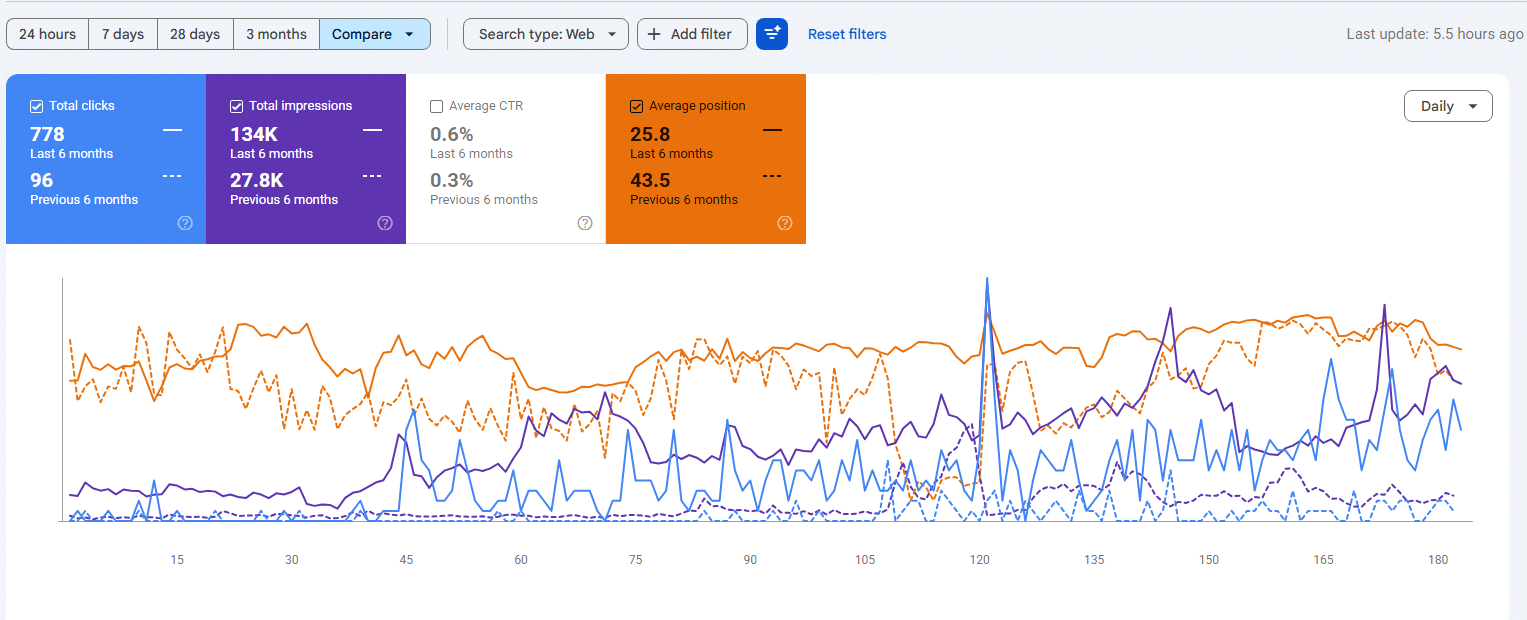
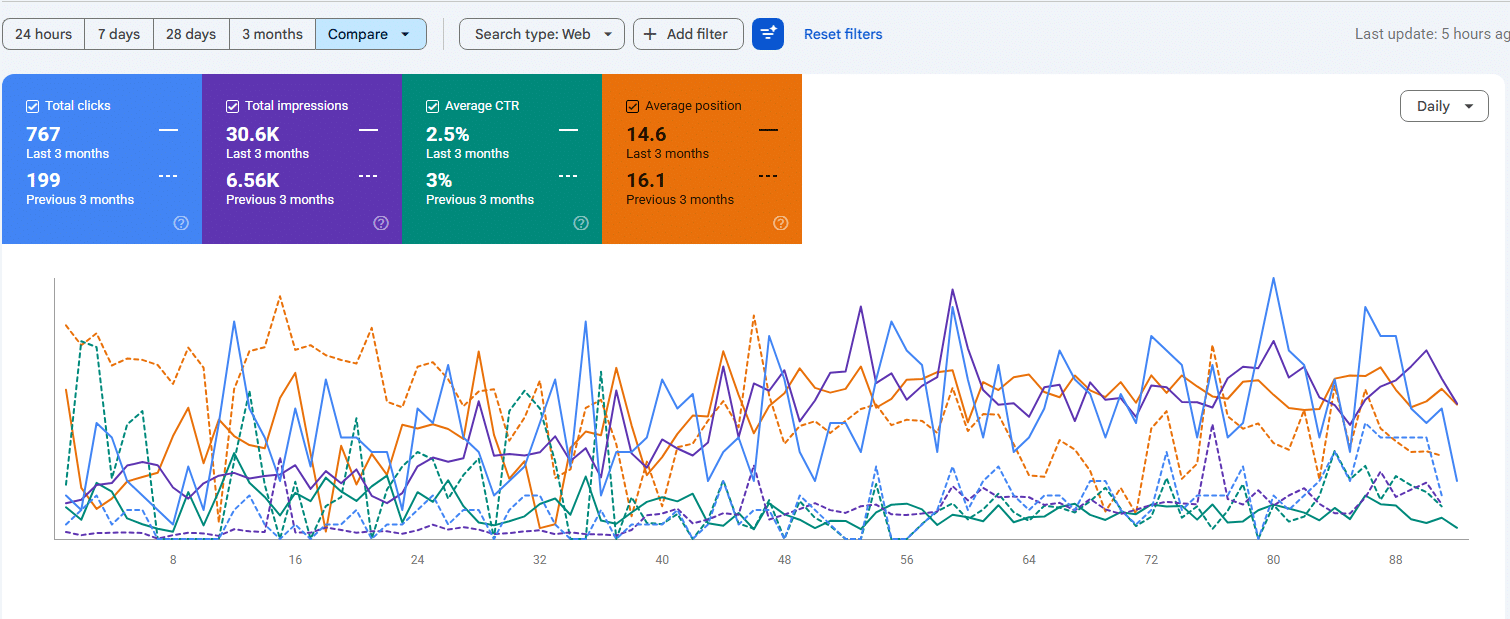
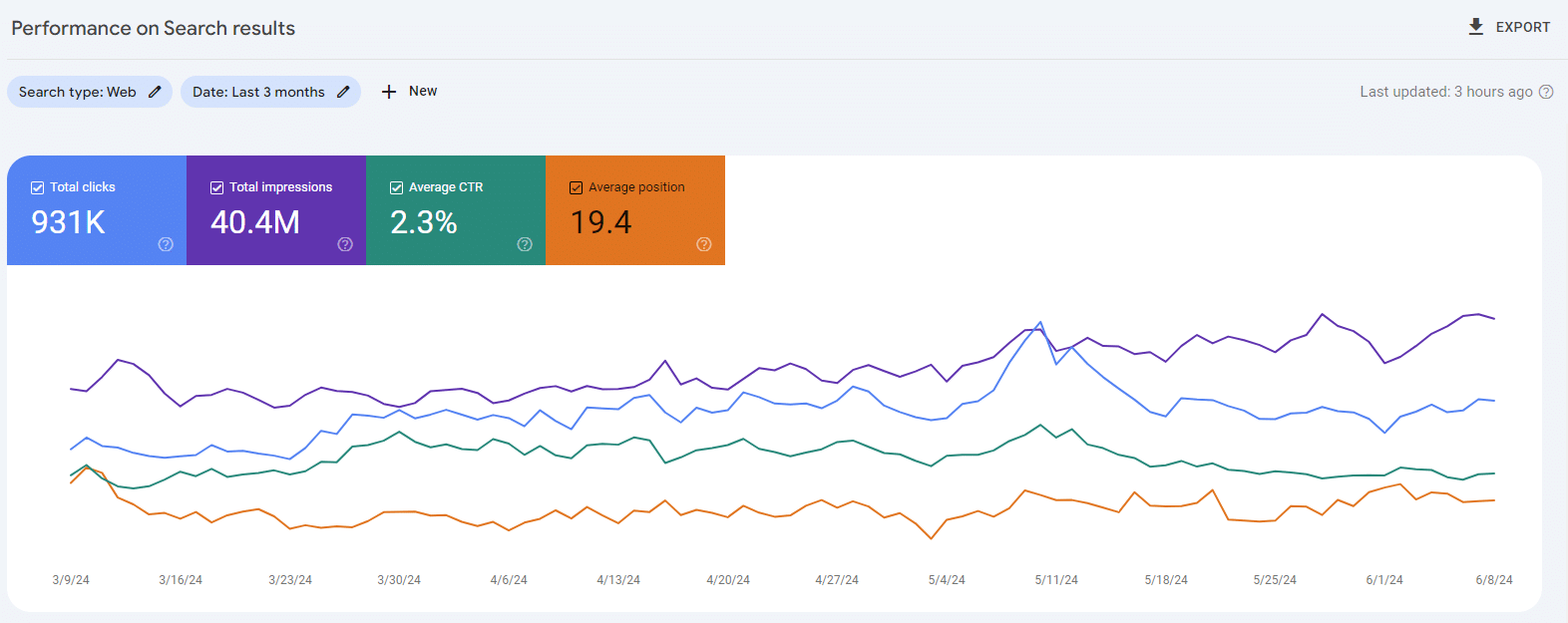
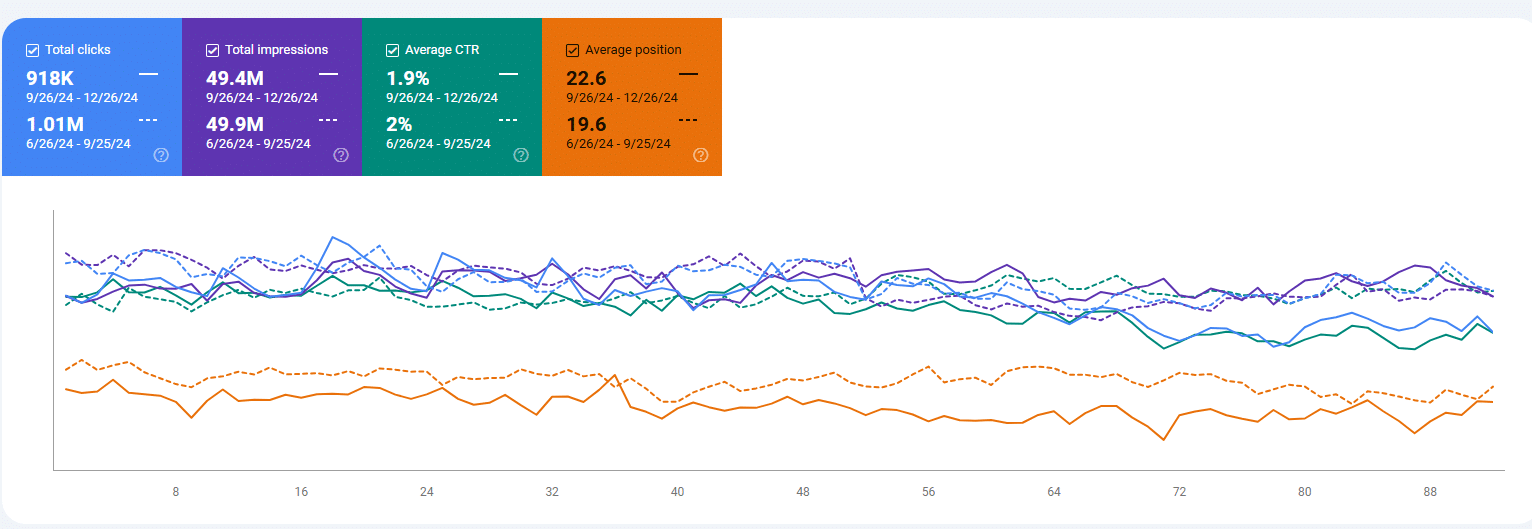
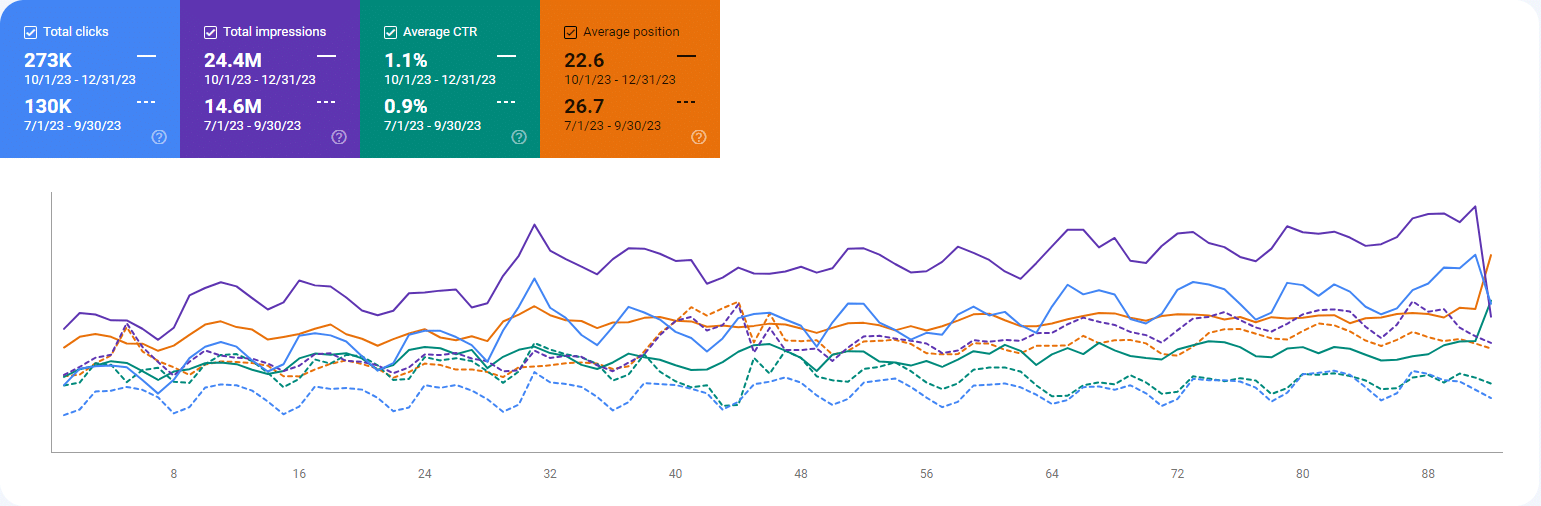
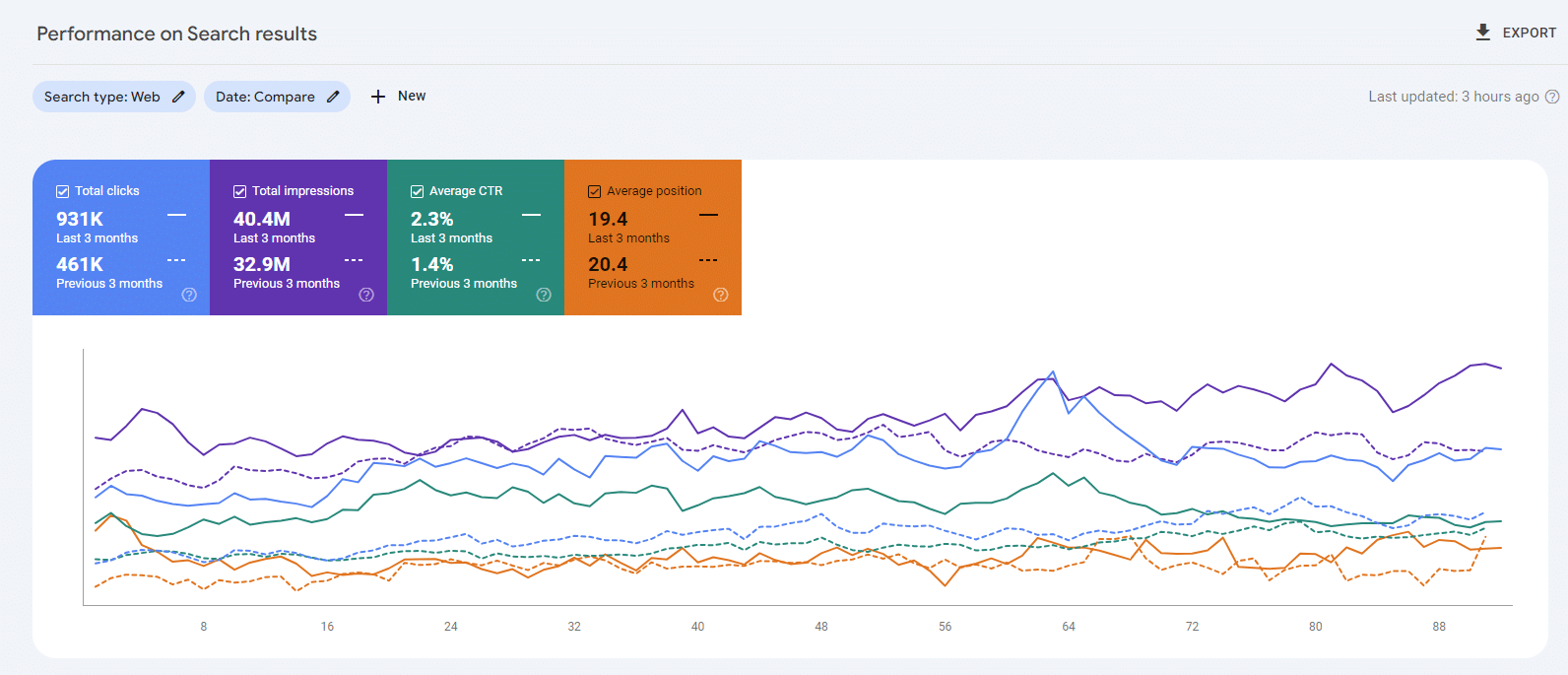
    WHAT SEO PERFORMANCE ACTUALLY LOOKS LIKE IN GOOGLE SEARCH CONSOLE

    Explore anonymised Google Search Console results from real SEO campaigns across different industries and reporting periods. Compare organic clicks, impressions, click-through rates and average positions to see how search performance changes over time. Client identities remain confidential, while the data provides a transparent view of campaign performance.
    Identify the Gaps in Your AI Search Strategy

    Why AI Search Visibility Needs More Than Content Changes

    Publishing helpful content is important, but content alone cannot resolve every discovery problem. Pages must also be accessible, internally connected and technically available for search systems to process.

    AI-generated answers may combine information from several sources. A business can publish an accurate page without being mentioned in a particular response, because the systems and sources used vary across queries and platforms.

    Clear brand information matters when a website describes its services inconsistently or leaves important details difficult to verify. Reviewing the website and relevant public information can help identify ambiguity that deserves attention.

    Make Important Information Clear

    Give each page a clear purpose and answer the questions your audience actually asks.

    Use simple headings and direct explanations.

    Keep key details easy to find. Clear service descriptions help visitors understand your expertise and make your content easier to interpret.

    Check whether important pages are accessible to search engines and whether the site’s structure supports discovery. Technical improvements should address verified issues rather than rely on speculative AI-specific tricks.

    Make your business identity, services and expertise clear across your website and relevant public profiles. Consistency supports understanding, but it does not guarantee that an AI system will recognise or mention your brand.

    Choose relevant queries and monitoring methods, then record observations consistently. Separate AI mentions and citations from Google Search Console metrics, website sessions and tracked enquiries to avoid attributing results to the wrong source.

    What People Say About Us

    Nexa Growth has built over ten high-quality backlinks, meeting the client’s expectations. The team is highly accountable and responsive to the client’s requests and inquiries, and Nexa Growth is consistently praised for their accessibility and dedication to success.

    Source: Clutch

    They consistently strive to offer us the greatest options.

    Ryan Bogatez, CEO, Breezepay

    A Practical Approach to Generative Engine Optimisation

    GEO should support your wider search strategy, not become a disconnected collection of experiments. Nexa Growth can position the work around clear priorities, established SEO principles and evidence that can be reviewed.

    Recommendations Grounded in Evidence

    Start with your existing website, search performance and business objectives. Prioritise issues that can be demonstrated or reasonably investigated rather than making assumptions about how every AI platform selects sources.

    Content Built for Real Questions

    Focus on useful explanations, clear service information and relevant supporting evidence. The objective is to help people understand your business, not to produce repetitive content for a perceived algorithmic shortcut.

    SEO Fundamentals Remain Central

    Technical accessibility, internal linking, useful content and clear website structure continue to matter. GEO should complement these foundations instead of replacing established search optimisation practices.

    Transparent Reporting

    Separate completed work from observed changes and business outcomes. Explain what the available data shows, where evidence is limited and what should be investigated next.

    How Nexa Growth Approaches GEO

    Assess Current Visibility

    Review your website, existing organic search performance and the questions relevant to your audience. Where appropriate tools are available, establish a baseline for selected AI search queries and brand mentions.

    Identify Content and Technical Gaps

    Evaluate important pages for clarity, coverage, crawl accessibility and consistent business information. Prioritise findings according to relevance, evidence and the effort required to address them.

    Implement Agreed Improvements

    Develop a practical action plan covering the confirmed scope, such as content refinements, technical SEO recommendations or improvements to brand information.

    Monitor and Refine

    Review changes in traditional search performance and selected AI visibility observations where measurement is available. Use the findings to refine priorities without assuming that one change caused every observed result.

    Discuss Your AI Search Priorities

    Tell us about your business, your current organic search strategy and the changes you are seeing in how customers discover information. We can discuss the areas that may deserve closer investigation.

    The conversation can help establish whether GEO support is appropriate and how it could fit alongside your existing SEO work. Any audit, implementation or monitoring deliverables should be agreed separately where required.

    • Discuss your search objectives

    • Review current SEO challenges

    • Explore content opportunities

    • Identify practical next steps

    Frequently Asked Questions

    1. What are generative engine optimization services?
    Generative engine optimization services focus on helping businesses present useful, accessible and clearly structured information across AI-powered search experiences. Depending on the scope, work may include content reviews, technical SEO checks, brand information consistency and monitoring selected AI search queries.
    2. What is the difference between GEO and traditional SEO?
    Traditional SEO focuses on improving a website’s ability to appear in relevant search results. GEO focuses on how business information may be discovered, understood, referenced or cited in AI-generated responses. The two overlap substantially, and GEO should complement rather than replace established SEO practices.
    3. Does GEO replace SEO?
    No. Technical accessibility, useful content, internal links and clear website information remain important foundations. GEO builds on these practices by considering how people discover information through AI-powered experiences as well as conventional search results.
    4. Can GEO guarantee that my business appears in AI-generated answers?
    No. AI-generated responses vary by query, platform, context and time. A business can improve the clarity and accessibility of its information, but no agency can guarantee that an AI system will mention, recommend or cite a particular brand.
    5. Does Google require special optimisation for AI Overviews?
    Google’s published guidance points website owners towards established SEO fundamentals, helpful content and technical accessibility. It does not require special AI-specific schema or additional technical requirements specifically to appear in AI Overviews or AI Mode. Inclusion is not guaranteed.
    6. What role does technical SEO play in GEO?
    Technical SEO helps ensure that important pages can be accessed, crawled and processed where applicable. Issues involving crawl restrictions, indexation, internal links or rendering may need investigation, but resolving them does not guarantee inclusion in AI-generated answers.
    7. How can a business measure AI search visibility?
    Depending on the tools available, monitoring may include selected prompts, brand mentions, cited URLs and the sources referenced in AI-generated answers. These observations should be recorded consistently and kept separate from Google Search Console data, website traffic and tracked conversions.
    8. How long does GEO take to show results?
    There is no reliable universal timeframe. Outcomes depend on the website’s current condition, the changes required, the search platform and how visibility is measured. AI responses can change independently, so progress should be reviewed over a suitable period without promising a fixed result date.
    9. Does structured data help a website appear in AI search?
    Structured data can help search engines interpret eligible information when it accurately reflects visible page content and follows relevant guidelines. It is not a guarantee of AI citations or mentions, and it should not be presented as a special GEO shortcut.
    10. Is GEO suitable for small and medium-sized businesses?
    It may be useful for businesses whose customers research services, compare providers or ask detailed questions through AI-powered tools. The right starting point depends on audience behaviour, existing SEO foundations, available resources and whether AI visibility is a meaningful business priority.
    11. Should I create separate content for every AI platform?
    Not by default. Start with accurate, useful content that serves your audience and follows established SEO principles. Platform-specific investigation may be appropriate when there is evidence of a relevant issue, but duplicating content for different AI systems can create unnecessary work.
    12. How is GEO different from AI SEO?
    The terms are often used with overlapping meanings. AI SEO can refer broadly to SEO in an environment shaped by AI, while GEO commonly focuses on visibility in generative answers. Providers may define them differently, so clarify the actual deliverables before choosing a service.
    Go to Top